
We grow by losing. Every toy, place, every person we leave behind accumulates in a place we call the "Landfill of the unforgotten" – nothing but a waiting room. At the end of our road, we arrive there to meet everything we ever lost, the final reunion.

At six I started school. By lunch, the toy car my mother gave me for courage was gone. On the bus home a boy offered me chewing gum and waved when he left. I never found the car. I found Daniel instead.
By seven I had a shoebox under my bed. A missing mitten. A key to no lock. A postcard from a cousin I'd never met.
By seven I had a shoebox under my bed. A missing mitten. A key to no lock. A postcard from a cousin I'd never met.
The Wooden Horse
Age 4 – 7
I was four when the wooden horse disappeared.
Small thing. Chipped ear. Painted saddle worn to bare wood where my thumb had rubbed it, the way you rub a worry stone. I carried it everywhere - bath, garden, the dry warmth of my grandmother's lap. She'd make it gallop across my chest, humming something low about a knight who never came home.
Then one afternoon: gone. I searched the sofa, the radiator, the laundry basket. I cried until my throat burned. My mother knelt and held my face. "Maybe it went to the land of lost things. That's where everything goes when we can't find it."
I believed her immediately. I imagined a valley - quiet, not sad - filled with lonely toys waiting on shelves of soft grass. That night I dreamed of the horse galloping across a field of broken clocks and single shoes. It looked free. I woke less sad than I had any right to be.
Small thing. Chipped ear. Painted saddle worn to bare wood where my thumb had rubbed it, the way you rub a worry stone. I carried it everywhere - bath, garden, the dry warmth of my grandmother's lap. She'd make it gallop across my chest, humming something low about a knight who never came home.
Then one afternoon: gone. I searched the sofa, the radiator, the laundry basket. I cried until my throat burned. My mother knelt and held my face. "Maybe it went to the land of lost things. That's where everything goes when we can't find it."
I believed her immediately. I imagined a valley - quiet, not sad - filled with lonely toys waiting on shelves of soft grass. That night I dreamed of the horse galloping across a field of broken clocks and single shoes. It looked free. I woke less sad than I had any right to be.
My father called it junk. My mother just smiled and said nothing, which felt like permission. It was a shoebox.
The Grandmother's Thimble
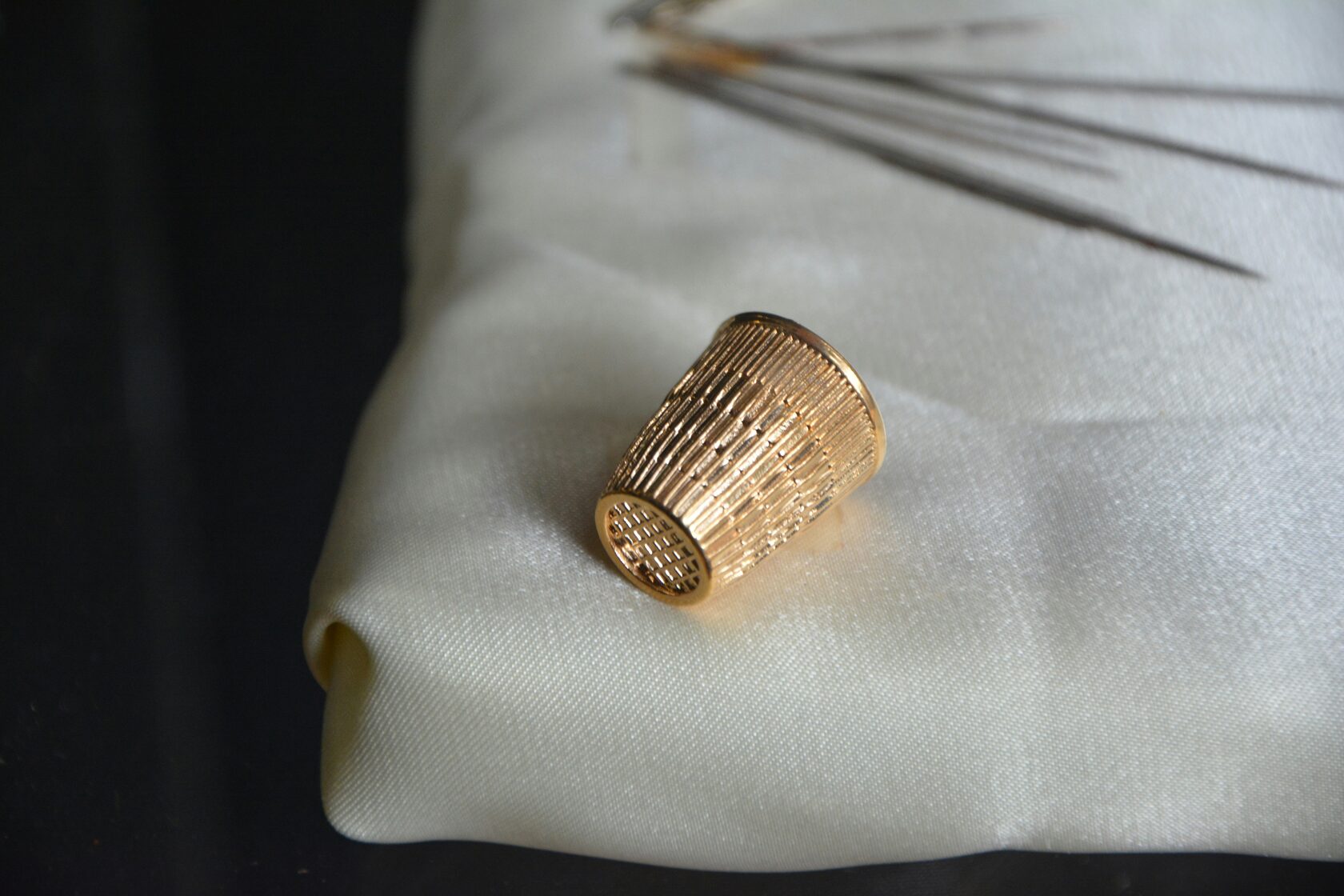
My grandmother died when I was eight. I didn’t cry at the funeral. I was more confused than sad — confused that the world simply continued: buses on schedule, homework still due Monday. A week later my mother gave me a small box: a silver thimble worn thin at the crown, a recipe card for apple cake in handwriting I knew by heart, a pair of glasses with one cracked lens. She’d want you to have these. I put the thimble on — too big, it slid around my finger — and wore it for most of that week. The shoebox couldn’t hold all of
it. I moved everything into a wooden recipe box with a hinged lid and brass corners. The things inside deserved something sturdier. At ten I found a wristwatch in wet leaves: cracked face, no strap, hands stopped at 7:32. On the back: M.K. I wondered, every time
I looked at it, whether they’d ever noticed it was gone. That’s hoarding, my father said. It’s saving, I said. He had no answer.
it. I moved everything into a wooden recipe box with a hinged lid and brass corners. The things inside deserved something sturdier. At ten I found a wristwatch in wet leaves: cracked face, no strap, hands stopped at 7:32. On the back: M.K. I wondered, every time
I looked at it, whether they’d ever noticed it was gone. That’s hoarding, my father said. It’s saving, I said. He had no answer.
Age 8 – 12
1972
The first box

At twelve we moved. I packed the wooden box inside a suitcase layered with shirts. The suitcase ended up in the old garage; by the time anyone thought to check, the new owners had cleared it. I sat on the floor of my new bedroom, which smelled of someone else’s paint, and felt the hollow shape of a loss I couldn’t point to. That evening Marcus knocked on my door — eleven, my new stepbrother, a kid I’d met exactly twice. He held out a small grey stone painted, badly but with real effort, like a ladybug. Found it at my old school. You can have it. He didn’t know about the box. He’d just looked at me and decided I needed something to hold onto. I lost an entire archive that year. I gained a brother.
13– 22
Age
At thirteen I found The Book of Lost Things by John Connolly in my school library. David’s world — a boy who loses his mother and falls into a country built from stories — felt like a mirror. A battered copy of The Little Prince had been left unclaimed on the library counter. I took it. I started a new shoebox.

without ceremony, Since you were so bothered about it — and
a photograph of my grandmother squinting into summer light. On the train I watched a landfill slide past. I thought: somewhere that landfill has a back door. Behind it is a gallery. At twenty-two
I met Elena in the coffee shop where I worked. She noticed three buttons I’d arranged in a glass dish — rescued from the lost-and-found drawer my manager called a fire hazard and
I called a mercy. She collected buttons too, she said, each snipped from a garment worn through some important moment. She looked at each thing with the attention of someone reading a language they had mostly forgotten. You keep these because you believe they still have a life. Yes, I said. Exactly that.
a photograph of my grandmother squinting into summer light. On the train I watched a landfill slide past. I thought: somewhere that landfill has a back door. Behind it is a gallery. At twenty-two
I met Elena in the coffee shop where I worked. She noticed three buttons I’d arranged in a glass dish — rescued from the lost-and-found drawer my manager called a fire hazard and
I called a mercy. She collected buttons too, she said, each snipped from a garment worn through some important moment. She looked at each thing with the attention of someone reading a language they had mostly forgotten. You keep these because you believe they still have a life. Yes, I said. Exactly that.
At fifteen, a girl with red hair sat two rows ahead of me on the school bus, always with earphones in and a sketchbook open. One morning a sock fell out of her bag — thick wool, dark green — and landed in the aisle. I tapped her shoulder. You dropped this. She said: I’ve got about six of those with no pair. They just vanish. I said: I have a shoebox of lost things. She saved me a seat the next day. Her name was Clara. We weren’t in love, though there was a version of that possibility we both sometimes looked at and set back down. We were something rarer: the right friend at the right time. At eighteen I left for university. Marcus pressed the ladybug stone into my hand. For luck. I packed it with the other survivors: The Little Prince, Clara’s green sock — she’d pulled
it from her bag the week before and pressed it into my hands
it from her bag the week before and pressed it into my hands


Loss is not a hole It is a door
23 - 40
Age
e married in late spring, light coming in sideways, making everything amber. Elena wore a blue dress; she snipped the buttons off that evening and added them to her ribbon. We married in late spring, light coming in sideways, making everything amber. Elena wore a blue dress; she snipped the buttons off that evening and added them to her ribbon. At twenty-five our daughter Mia was born — seven pounds, fingers like question marks.
I looked at her sleeping face and thought of all the things she would one day lose. At twenty-eight Marcus died. A wet road, a Tuesday evening, no logic. The ladybug stone was in the glove compartment of his car; they returned it to me in a small paper envelope, shattered in four pieces. The year after that I was someone I didn’t fully recognise — remote, not quite present. Elena was patient in a way that cost her something.
At thirty I saw a write-up in the local paper about a small shop called Findings, two streets from where I used to catch the school bus. The artist built sculptures almost entirely from unclaimed lost property — train stations, libraries, the council’s lost-andfound, which had a backlog stretching back years. The artist’s name was Clara. I went on a Saturday. She recognised me before I said a word. You’re the trunk guy. Findings was more workshop than gallery — trays of keys, watches, shoes, buttons. Clara explained that lost-property offices are required to hold unclaimed items for a set period, and then dispose of them, and that dispose of almost always meant landfill, unless someone like her asked first. Bring it in, she said, and we’ll see what it wants to become. At thirty-one I went back for the unveiling of a thimble sculpture — not my grandmother’s, but close enough that I couldn’t speak for ten minutes. Elena put her hand on my arm. Are you crying? I was. At thirty-five, Mia lost her stuffed rabbit on a train. I knelt beside her the way my mother once knelt beside me. Maybe it’s gone somewhere it’ll get a second life. Eight months later Clara called: the rail company had donated unclaimed soft toys, and one was a grey rabbit with a chewed ear, now a mobile, ears spread wide like wings. Mia saw it online and went quiet. That was somebody’s actual rabbit? She didn’t ask if it was hers. At forty, Elena and I divorced — gently, without blame, two people grown into different shapes. She took the button ribbon. I took the trunk. We were kind about it, and sad about it, in roughly equal measure.


Loss is not a hole It is a door
At fifty I started volunteering at Findings. At fifty-six, Elena died in her sleep. Her button ribbon came back in a padded envelope with a note from a friend I’d never met: She said you’d know what to do with this.
I gave it to Clara without asking what she’d make of it. I preferred not knowing. At sixty-five I lost my flat and moved into the small room above the shop, the chest at the foot of the bed, exactly where a chest like that belongs. I sat near the entrance with a cup of tea and told people where things had come from — or invented something plausible if I didn’t know. That sock? A girl dropped its pair on a school bus. Forty years later, it’s a puppet. People laughed, mostly.
I gave it to Clara without asking what she’d make of it. I preferred not knowing. At sixty-five I lost my flat and moved into the small room above the shop, the chest at the foot of the bed, exactly where a chest like that belongs. I sat near the entrance with a cup of tea and told people where things had come from — or invented something plausible if I didn’t know. That sock? A girl dropped its pair on a school bus. Forty years later, it’s a puppet. People laughed, mostly.
Somewhere in my late forties I stopped calling it a trunk. I moved everything into a proper wooden chest — iron hinges, brass lock, a lid thick enough to sit
on. An antique shop had it in the window for three weeks. One morning I went in and bought it without negotiating, which is very unlike me. I layered the contents in carefully: the ladybug shards at the bottom, the photograph above that, the ticket stub from the first film Elena and I saw together, The Book
of Lost Things with its spine taped twice, the green sock, and a note Mia had written at six in red felt-tip on the back of a receipt: Dad you are good
at finding things. Please find my other shoe. (I never found the shoe. That was, in its own way, the most honest thing anyone ever wrote me.) Each thing inside had survived something — a house move, a death, a divorce, years of hands. Each had been held by someone who hadn’t meant to let it go. That felt like exactly the definition of treasure.
on. An antique shop had it in the window for three weeks. One morning I went in and bought it without negotiating, which is very unlike me. I layered the contents in carefully: the ladybug shards at the bottom, the photograph above that, the ticket stub from the first film Elena and I saw together, The Book
of Lost Things with its spine taped twice, the green sock, and a note Mia had written at six in red felt-tip on the back of a receipt: Dad you are good
at finding things. Please find my other shoe. (I never found the shoe. That was, in its own way, the most honest thing anyone ever wrote me.) Each thing inside had survived something — a house move, a death, a divorce, years of hands. Each had been held by someone who hadn’t meant to let it go. That felt like exactly the definition of treasure.
Age 41 - 73


At seventy-three my grandson Leon visited — eighteen, lost in the formless way that eighteen-year-olds are lost. He sat on the chest without realising what
it was. Then he lifted the lid and looked in for a long time. Grandpa, is this everything? No, I said. It’s what survived. It was around then that I started thinking about my grave. Not morbidly. More like planning a trip you’ve been meaning to take. I thought about what I wanted left behind, and what I kept coming back to was the image from those pirate films: the chest buried on an island, the red X on the map, and the whole point being that someone will come looking. Someone will dig. Someone will find it and open the lid and go oh — not because of what’s worth money, but because of what’s worth remembering. A stone painted like a ladybug. A recipe card spotted with kitchen steam. A sock. A ticket to a film neither of us could remember a week later. I want my grave to feel like that. Like an X on a map made on purpose. Like there is something worth finding here. Come and look. The chest is still in the corner of the room, lid open. The landfill of the unforgotten is out there somewhere — the back door behind the pale mountain, the waiting room full of things that haven’t yet become what they’re supposed to be. I’ve been heading toward it my whole life. I’m not afraid of arriving.
it was. Then he lifted the lid and looked in for a long time. Grandpa, is this everything? No, I said. It’s what survived. It was around then that I started thinking about my grave. Not morbidly. More like planning a trip you’ve been meaning to take. I thought about what I wanted left behind, and what I kept coming back to was the image from those pirate films: the chest buried on an island, the red X on the map, and the whole point being that someone will come looking. Someone will dig. Someone will find it and open the lid and go oh — not because of what’s worth money, but because of what’s worth remembering. A stone painted like a ladybug. A recipe card spotted with kitchen steam. A sock. A ticket to a film neither of us could remember a week later. I want my grave to feel like that. Like an X on a map made on purpose. Like there is something worth finding here. Come and look. The chest is still in the corner of the room, lid open. The landfill of the unforgotten is out there somewhere — the back door behind the pale mountain, the waiting room full of things that haven’t yet become what they’re supposed to be. I’ve been heading toward it my whole life. I’m not afraid of arriving.


